



Less Trans
B2B software for sales and delivery tracking.
B2B software to record what is sold and delivered: quantities, prices, and recipients.
About this project
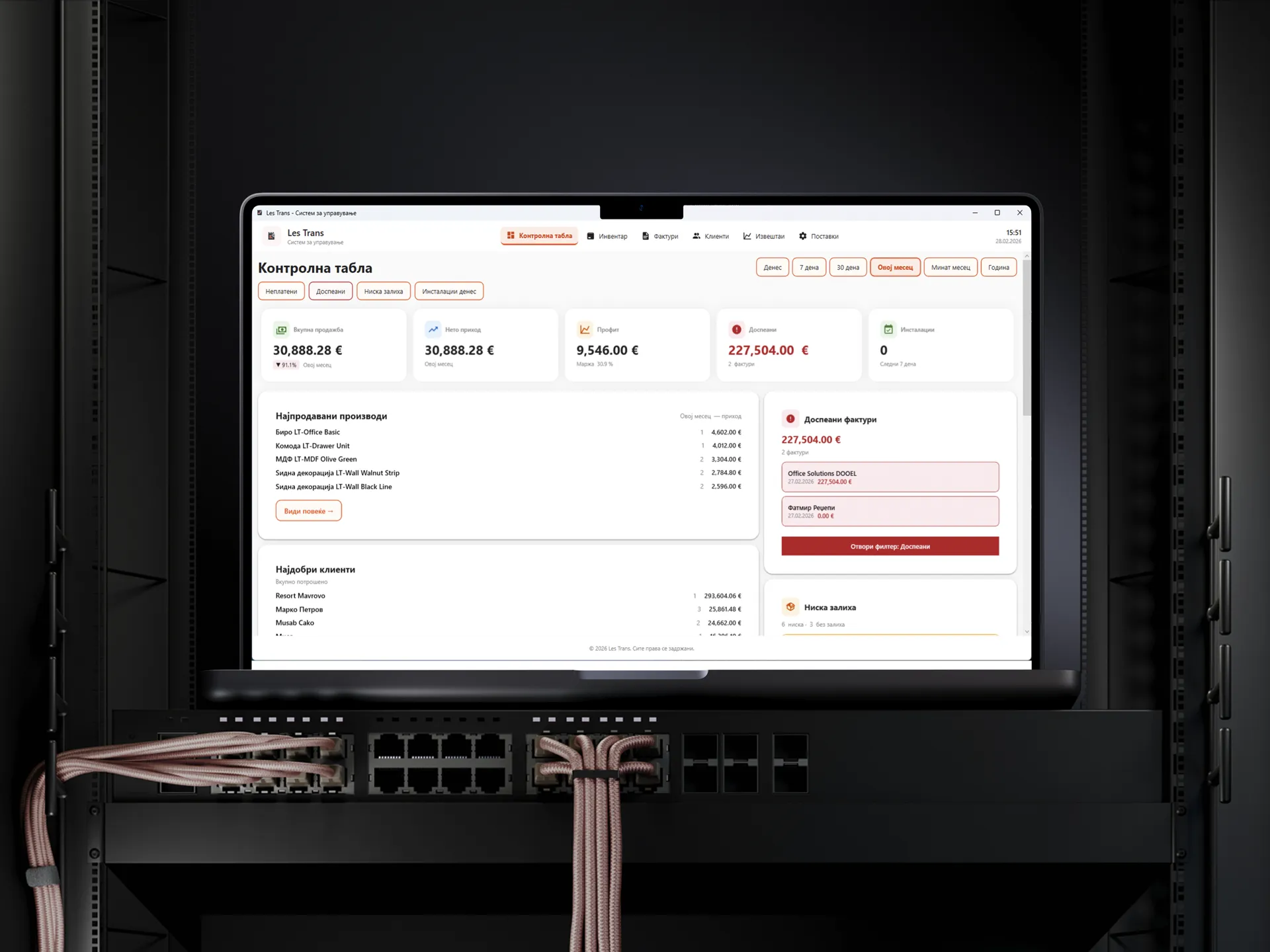
Less Trans is a B2B sales and delivery tracking system built for a company that supplies raw materials — primarily wood products — to other businesses. Before this software existed, the client was managing their outgoing shipments through a combination of handwritten notes, spreadsheets, and memory. That worked when the volume was low. As the business grew and the number of client companies increased, the gaps became costly: deliveries went unreconciled, invoice disputes arose because the seller and buyer had different records, and pricing history was scattered across files that no one fully trusted. The project started with a straightforward brief — build a place to record what gets sent, to whom, and at what price — but the real work was in understanding the operational reality behind that brief. The client did not deliver whole orders in one go. A company might order 500 units of a specific wood type, and the seller would fulfil that order across three or four separate delivery runs as stock became available. This meant the software could not treat each delivery record as a standalone transaction. It needed to reflect the relationship between a delivery and the broader order or agreement it was part of, so the client could always see how much had gone out and how much was still outstanding. We designed a data model centred on two entities: the recipient company and the delivery record. Each delivery is linked to a recipient, carries a material type, a quantity, a unit price, and a delivery date. From there, the system calculates totals and lets staff view the full delivery history for any given company — sorted, filterable, and exportable. Creating a new record was designed to take under a minute: select the recipient, enter the material and quantity, confirm the price, save. No unnecessary fields, no multi-step wizards. Search and filtering were a priority from day one. Staff needed to pull up all deliveries to a specific company in a date range, or find every delivery of a particular material type across all clients. The interface was built so those queries required no technical knowledge — just filters applied from a clean list view. We also built a partial delivery reconciliation view, where the client can see, per recipient, the total quantities delivered over any period against what was agreed. This gave the business a real-time picture of which accounts were current and which had open balances — something that previously required manual calculation. The result is a focused, stable internal tool that replaced a fragmented paper-and-spreadsheet process with a single source of truth for sales and delivery operations.
The Challenge
The client sells and delivers raw materials — primarily wood products — to other businesses, and had no reliable system for tracking what was sent. Deliveries were logged informally: some in spreadsheets, some on paper, some not at all. As the client base grew, this created real operational problems. Disputes over quantities arose because there was no authoritative record. Pricing history was unreliable — different files held different numbers, and staff could not always determine which was correct. The more significant complication was that deliveries were rarely completed in a single run. An agreed order of 500 units might be fulfilled across three or four separate dispatches over weeks. Without software that modelled this properly, there was no way to know — at a glance — how much of a given order had actually been delivered and how much remained outstanding. Staff had to manually cross-reference multiple records to answer a basic question a customer might ask on the phone. The client also needed to look up delivery history by recipient company, by material type, and by date range, quickly and without needing to search through files. The existing setup made that slow and error-prone. The business needed a single, reliable record of what left the warehouse, to whom it went, at what price, and when — with the ability to reconcile partial deliveries against the full agreed quantity.
Our Approach
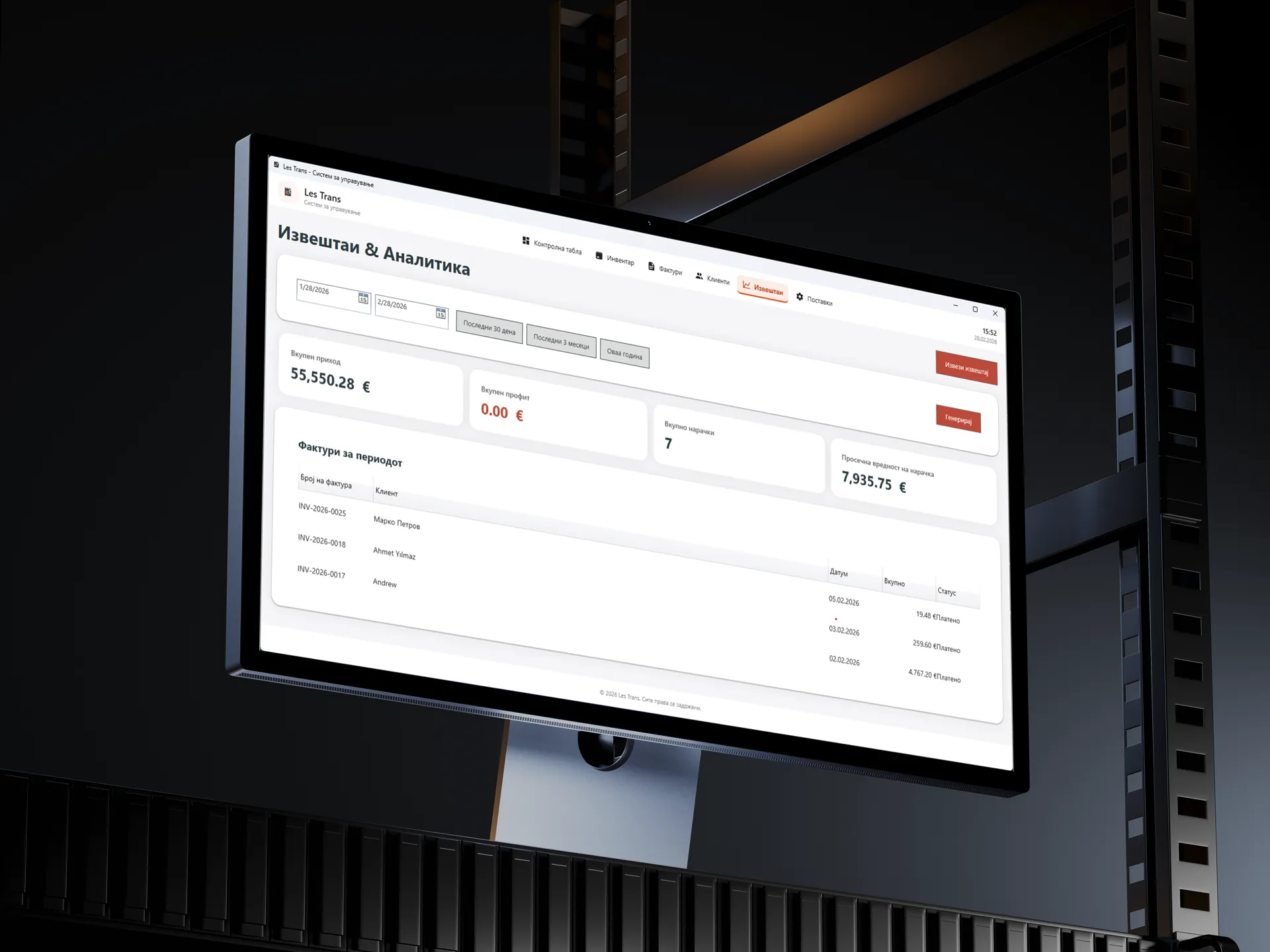
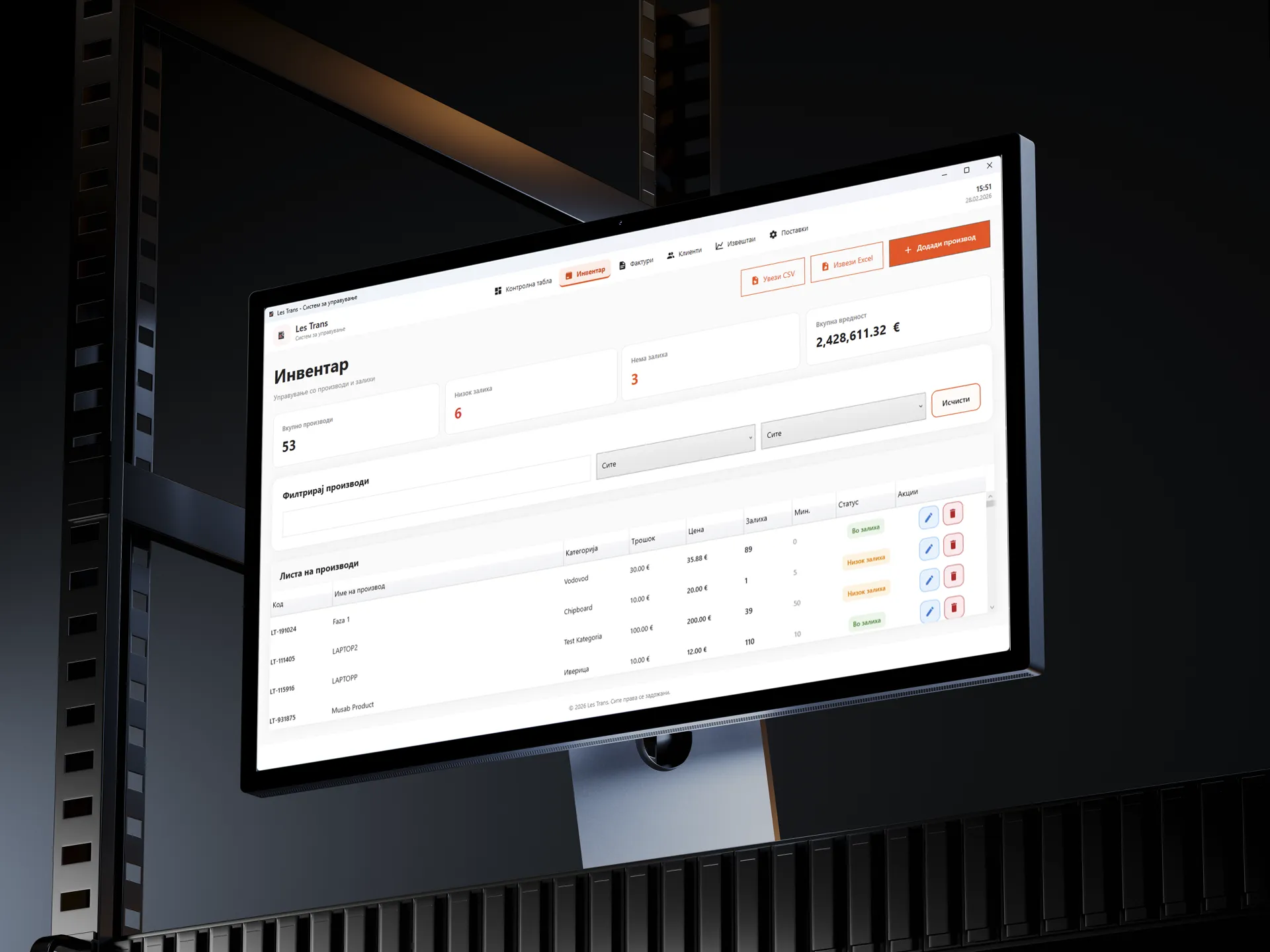
We built a focused web application with a data model designed around the two core entities that matter to the business: recipient companies and individual delivery records. Each delivery record captures the recipient, material type, quantity, unit price, and date. Records are linked to recipients so the system can aggregate delivery history per company and surface outstanding balances at a glance. Record creation was designed for speed. A staff member can log a new delivery in under a minute — select recipient, enter material and quantity, confirm price, save. No unnecessary steps. The list view shows all deliveries in reverse chronological order with filters for recipient, material type, and date range, so pulling up any subset of the delivery history requires only a few clicks. The partial delivery reconciliation feature addressed the most operationally important problem: tracking how much of an agreed quantity has actually gone out. The client can view, per recipient, total quantities delivered over a period, broken down by material type, so they always know where a given order stands without manual calculation. The application runs as a private internal tool, accessible only to the client's staff. The stack was chosen for reliability and low maintenance overhead — the business needed software that would keep working without active management. Data is stored relationally so queries remain fast as the record count grows, and the interface is browser-based so no installation is required on staff machines.
Project images
How we did it
- 01
Scope and data model
2 weeksDefined what to track (quantity, price, recipient) and how users create and view records.
- 02
Build
8 weeksBuilt the app with record creation, listing, and search.
- 03
Launch
1 weekDeployment and handover.
We can now record what we send, to whom, and at what price in one place.
Related Services
Frequently Asked Questions
What was built for Less Trans?
How long did the Less Trans project take?
What technologies were used to build Less Trans?
What was the main challenge with the Less Trans project?
How did Zulbera approach the Less Trans project?
Ready to build
something great?
Whether it's a new product, a redesign, or a complete rebrand — we're here to make it happen.
Trusted by Novem Digital, Revide, Toyz AutoArt, Univerzal, Red & White, Livo, FitCommit & more